Reading derivatives
Many big moves in small tokens are not bought in spot; they are pushed by how the derivatives market is set up. Five lessons, one measure each: what it is, how to read it, and a real case from our reports. By the end you can read the board on your own.
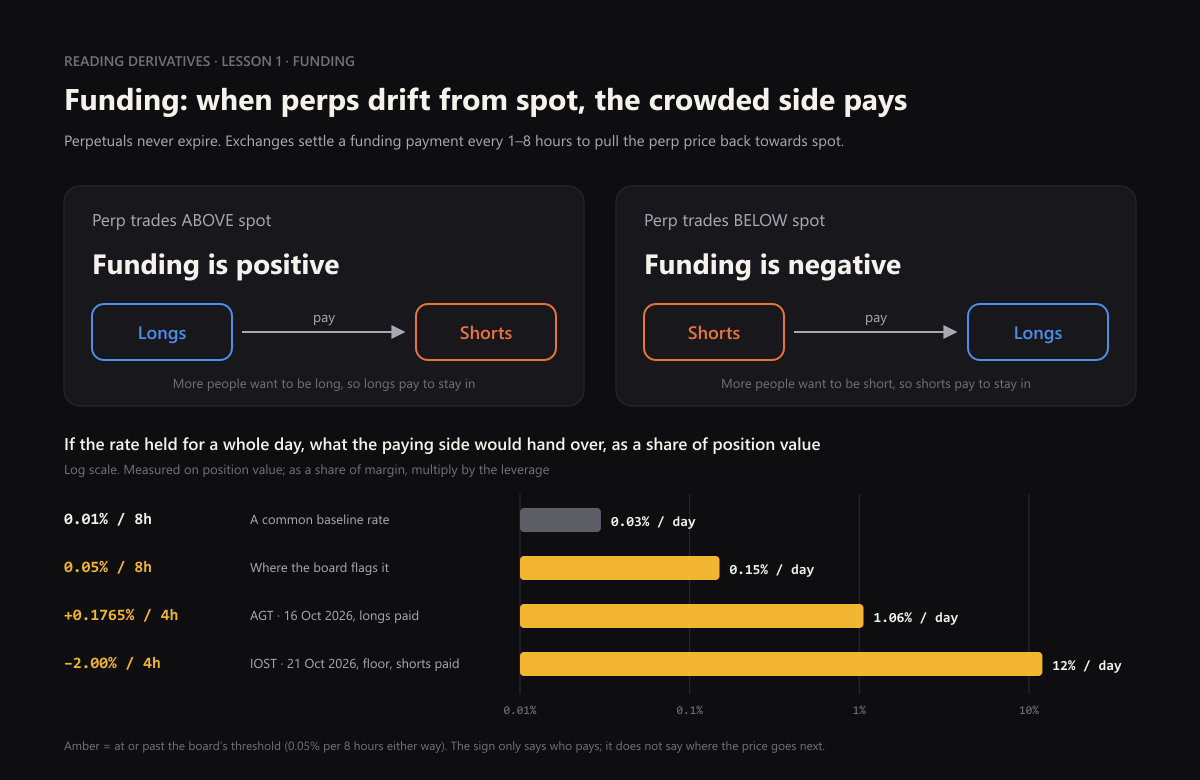 01 · FundingFunding: who pays to stay in
When a perpetual drifts away from spot, the crowded side pays the other side on a schedule. The more extreme the rate, the more crowded that side.
Board flag:≥ ±0.05% per 8 hours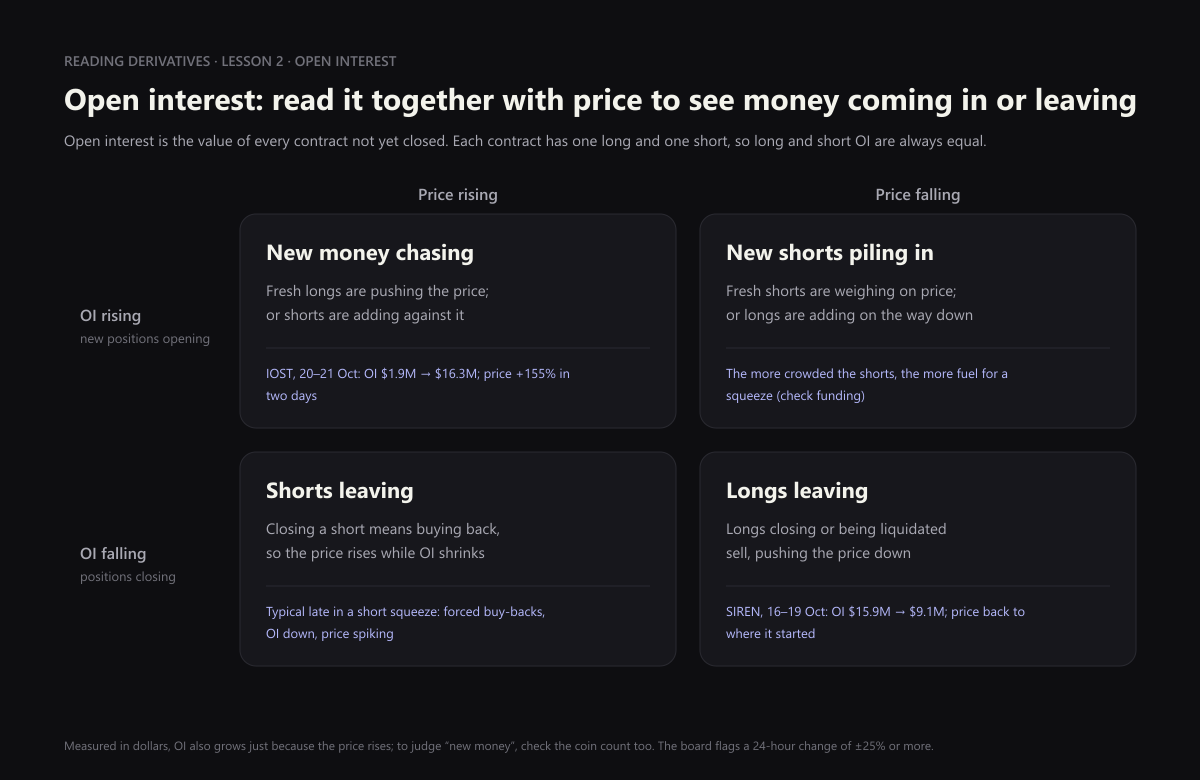 02 · Open interestOpen interest: is new money coming in
Open interest is the value of every contract not yet closed. On its own it has no direction; read it with price and you can tell money arriving from money leaving.
Board flag:24-hour change ≥ ±25%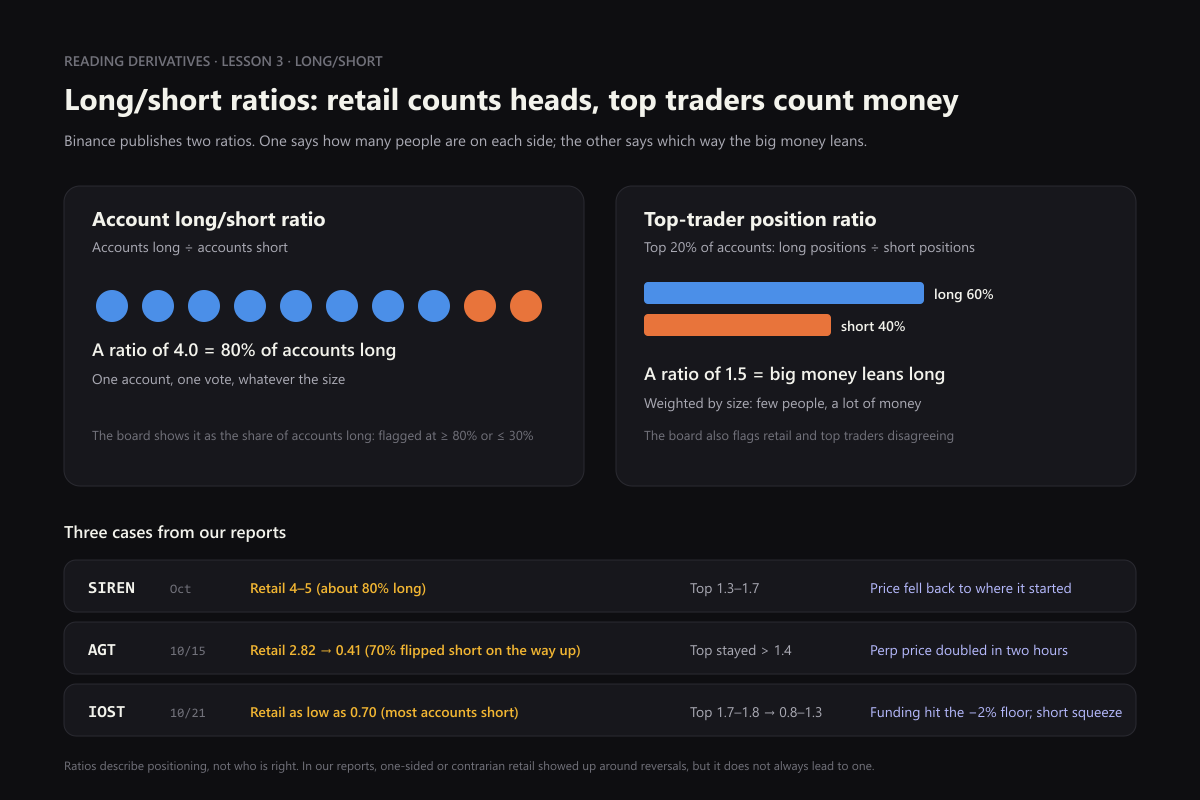 03 · Long/shortLong/short ratios: where retail stands, where big traders stand
Binance publishes two long/short ratios: one counts heads, showing how many accounts are on each side; the other weighs money, showing which way the big positions lean. Watch when either goes one-sided or the two disagree.
Board flag:Retail ≥ 80% or ≤ 30% long, or against big traders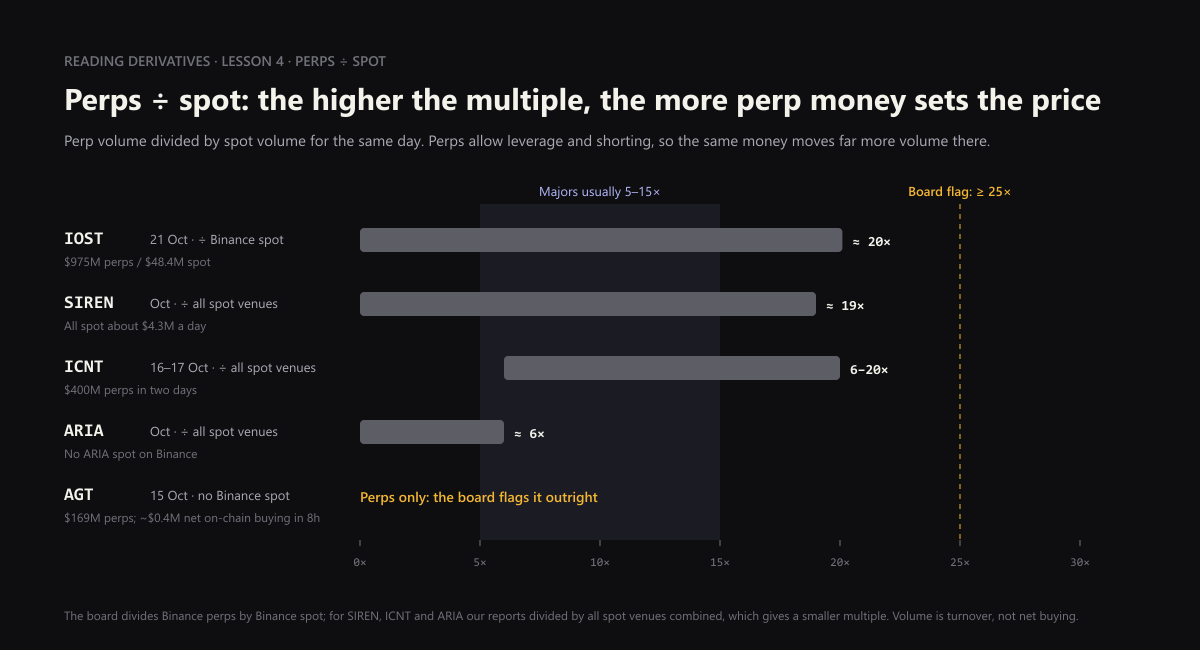 04 · Perps ÷ spotPerps ÷ spot: who moves the price
Perp volume divided by spot volume for the same day. The higher it is, the more perp money sets the price; for small tokens with thin spot, the price can rise and fall without anyone buying or selling much spot.
Board flag:25× or more, or no Binance spot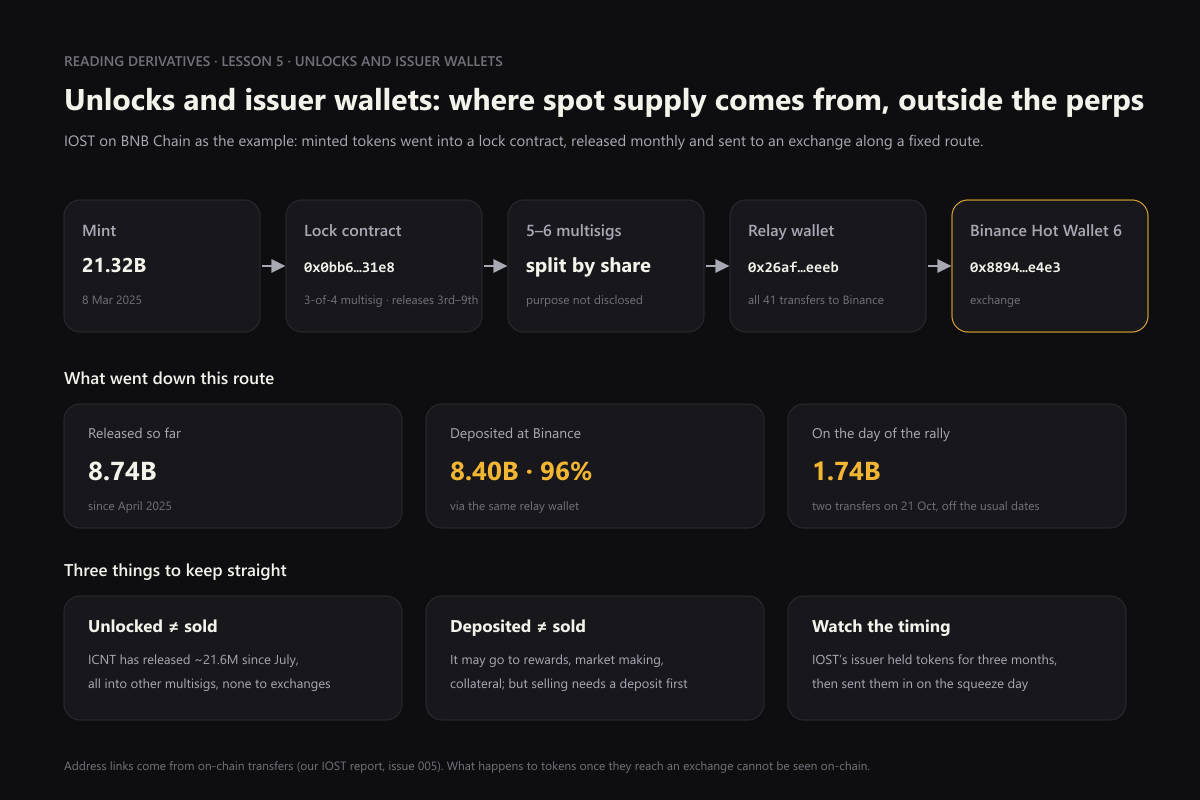 05 · Unlocks and issuer walletsUnlocks and issuer wallets: where spot supply comes from
Perps decide how the price gets pushed; spot supply depends on where the tokens come from. Follow them from the lock contract through multisigs and relay wallets to an exchange, and you learn where unlocked tokens went and when.
Board flag:Issuer wallets sending to exchanges
This series explains what the measures mean and how to read them. It makes no buy, sell, leverage or position-size suggestions. Derivatives are high-risk; the measures describe what the market looks like now, not what happens next.